When I start my discussions and interactions with promoters, investors and senior managers in the hospital industry, one of the first requests that I make is to shed some light on their strategy for the next 3 or 5 years. In case we are discussing a new project, I request for a strategy and business plan. Shockingly! In most cases they don’t have a clue. Half of them don’t even know what we are talking about and those that are aware lament the fact that they just lack the band width “to do strategy”. In case of investors I am met with a sense of frustration as they are not able to get this level of granularity from the management/ promoters of entities where they have interest.

The next question that I pose is: Who is doing the strategic thinking in your organisation? Usually the conversation now comes to an awkward pause!

What I am asking for is not rocket science, so what are the reasons that this main lynchpin of successful business growth is missing from the hospital industry? The six main reasons that I can think of are:

  1. Financial pressure
  2. Investor pressure
  3. Lack of awareness
  4. Lack of knowhow
  5. Lack of expertise
  6. “We know it all” mindset


6-reasons-lack-of-strategic

Financial Pressure

Most people are unaware of the financials of a hospital. I will attempt to provide a “back of the envelope” calculation of financials in order for us to properly appreciate the monetary pressure that a hospital operator works under:

new-table

This is just an illustration of some very basic financials for a 100-bedded hospital in India to make a point and is by no means to be taken as a complete financial analysis.These basic calculations reveal that in the first 2 years the hospital needs to make at least 4 crores per month to be able to handle their operating expenses and service their debt. So, from day 1 the hospital CEO is looking for at least 135 to 150 admissions per month. That is serious pressure!

This serious pressure which will further increase from the third year when the moratorium from the bank will expire. The EMI to the bank would immediately double.

This financial pressure is one of the prime reasons that strategic thinking never starts in the hospital. From day 1 they are under pressure. One of my favourite cautions for people wanting to start a hospital is to plan, plan, plan-essential for survival later.

Investor Pressure

As mentioned earlier there is serious interest from the investor community in the hospital market and a considerable amount of investment has happened in the last decade. These fund managers have their own agenda which is to maximise returns on investment in the fixed time period of time that they have for the investment. Hence for them time is essential as they have a window period of usually 5 years in which they are looking at a minimum 3X return, which is highly unlikely in the hospital industry. Hence, they put tremendous pressure on the management and promoters which results in knee jerk short term thinking vis a vis long term strategic thinking. My usual advice to investors who are keen on hospital investments is to increase their window of investment to 7 years which then provides adequate time for the new “pipelines” to mature and provide the requisite value.

Lack of Awareness

As I said earlier because of the attractiveness of the sector, there are different kinds of people who are interested in starting hospitals but most are completely unaware of the nuances of the business or how it works. They look for advice from their doctor friends and Chartered accountants who themselves have no clue. It isa common but erroneous assumption that if the promoters are doctors they would have complete knowledge and knowhow of operating hospitals. Unfortunately, that is not true. Most doctors have little understanding of strategy, business growth and operations of hospitals. They acquire knowledge by learning from their mistakes over a period of time. There have been many instances when I have been approached by Chartered accountants and architects to help them plan the interiors of the hospital or run the hospital. When I ask them some basic questions: Do you have a business plan? What medical specialities will you be offering? Who are you targeting? What is your doctor acquisition plan?

They not only have no answer but also never come back!

Lack of Know How

Recently I was in a discussion with a couple of doctors who have built the infrastructure of a 300 bedded hospital in one of the metros. They were expecting to be operational in a month. Subsequent to my site visit of the hospitals I estimated that in best case scenario they were at least 6 months away from being operational. The building was not finished, building utilities were not operational, the medical equipment was not installed, there was no staff recruited, no plan.

They had hired a consulting firm who had little expertise or experience but were “cheap”. During our discussions, they realised the extent of their lack of knowledge on starting the hospital or managing it. And these were senior doctors having more than 30 years of practice. They also realised that those cheap consultants were going to prove to be very expensive in the long run.

A lot of people just don’t know enough about hospitals their operations leave alone developing strategies on developing business. So they go by the traditional way of growing business- buy it!

Lack of Expertise

Those of us who have had some experience of running hospitals realise that presently there is a severe lack of availability of competent senior management in the industry. I am talking about C suite and Medical leadership. There are a lot of middle level managers who have great potential and will gain the requisite experience in the next few years and take their rightful places as heads of institutions. But till then there is very little talent available. Some prooters and senior management look at the top consulting firms with the hope and expectation that they would be able to deliver. However, the issue with them too is the same, even they lack people who have actually run large hospitals or chains of hospitals.

“We Know It All” Mind-set

This is another bane of the industry where everybody who is anybody believes that running hospitals is a piece of cake and they know it all. I will relate an incident which probably illustrates this admirably. I was approached by a senior colleague to help a person who had setup a big hospital somewhere in North India. The hospital was closed and they were desperate to operate it somehow. So, on his request I drove down to this town to do a site visit and was pleasantly impressed by the hospital. It was a well-built facility, had decent medical equipment, even had a fully equipped kitchen, but there were no patients. The hospital was locked. All the equipment was gathering dust. I made enquiries from some friends etc. and came to know that they had tried to run the hospital on their own for more than a couple of years but had been forced to close down as the losses were too heavy.

On my return, I met with the owner and shared my high-level thoughts on how to restart the hospital by focusing on developing a few medical programmes etc. He listened to me for all of 10 minutes and then flatly stated “Doctor let us drop all that. You just provide me with a surgeon, gynaecologist and cardiologist and I will run the hospital.” Period. I expressed my inability to help and the conversation closed. The owner was a lawyer and a builder!

It is difficult to have a meaningful engagement with a mind-set that knows it all!

Having understood the reasons why long term strategic thinking is not taking place to the extent it should, we will now discuss the first component of long term strategic thinking of growing the business:

Building Clinical Programmes
Introduction

The Indian healthcare market as a whole is growing at a compounded annual growth rate (CAGR) of 22.9 per cent during the last five years and is expected to touch US$ 280 billion by 2020. According to a recent study by the industry body Assocham, the Indian private hospitals segment is estimated to reach a level of US$ 125 billion by end of this year with a CAGR of 20%. There will be a requirement for an additional 600,000 to 700,000 beds in India over the next five to six years.

Owning and operating hospitals in India appears to be one of the most lucrative businesses today. A vast number of foreign and domestic investors, conglomerates, business men etc. tend to view starting hospitals as a great investment and commercial opportunity with low entry barriers, low competition and high demand, altogether a relatively easy to run business.

The attractiveness of the sector can be gauged from the value of transactions for private equity funding for hospitals which has increased from 94 million USD in 2011 to 1,275 million USD in 2016—a jump of 13.5 times. Some of the major global players who are active investors include TPG, Temasek, Abraaj, Carlyle, KKR, IFC etc. According to foreign direct investment fact sheets published by the government, the healthcare sector attracted foreign direct investment of Rs 4,149 crore till last year which is a jump of almost 169% over the five years since the financial year 2011-12.

Some of the factors that are fuelling this growth include increased longevity, rising income levels and health awareness, increased incidence of lifestyle related diseases and improved penetration of both private and government sponsored insurance coverage.

When we see these figures, it is natural to assume that operating a hospital in India must be a piece of cake. However, the life of senior management in hospitals can be extremely challenging. What many people fail to realise is that a hospital is an incredibly complex and difficult organisation to manage.

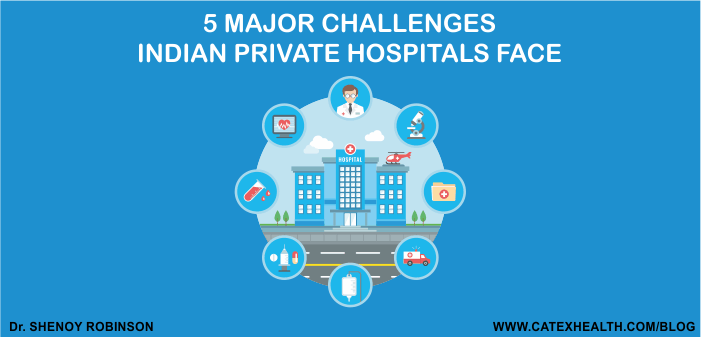
The 5 major challenges that most hospitals are grappling with in India today are:

  1. How to grow revenue
  2. How to maintain and increase margins
  3. How to satisfy an increasingly demanding and informed patient
  4. How to strengthen physician engagement
  5. How to source skilled manpower

In my blog, I will use my 30 years of industry experience in various senior management roles to shed some light on the finer nuances of manging the hospital business, develop diverse outlook to some of these issues, refresh perspectives to catalyze out of the box thinking and solutions to some of these challenges. The discussions would range from the challenges of starting new projects, to turning around sick ones and would include innovative views on the management large hospital chains.


how-to-5-challenges-infographic

The first major topic that we will take up is:

The Challenge of Growing Hospital business and revenue.

I will begin by giving a broad and provocative statement that is valid for a vast majority of private hospitals and doctors in the country:

“Stop buying business, focus on building it”

In the present market situation, most players are focused on ultra-short-term tactics to develop business and drive revenue. in order to substantiate this, lets understand a few “Marketing Strategies” that hospitals are using for driving revenue and growth:


webelements_12

Strategy Number 1: Acquiring “star” doctors

Engaging and acquiring“star” i.e. high value doctors by poaching them from other competitors. So, how is a star doctor defined? The main considerations are:

  1. Size of doctor’s patient base
  2. Number of surgeries/ procedures done by the doctor
  3. Amount of revenue that is currently generated by the doctor

Based on these criteria the doctors are chosen and then enticed to join the hospital by providing them with a range of incentives. These incentives include an increase in their earnings (Increased minimum guarantee or / and increase in revenue share), promises of individual marketing, promises of providing the latest medical equipment of their choice, promise of providing manpower of their choice so on and so forth. In other words, the so-called strategy is to offer them a more lucrative package than what they are currently getting irrespective of whether this would be financially viable. Very little thought is given to the Specialty, Gross margins, ability to maintain patient base or ability to increase the volumes is taken into consideration at this time of “wooing the bride”. I know of numerous examples where doctors having been lured by fancy promises that were not viable financially and joined the hospital. Over a period of time when the expected financials did not accrue the relationship between the hospital and doctor started to deteriorate with each side blaming the other for failure to keep their commitments and promises and ending with a bitter divorce.

Strategy number 2 Growing the Referral network

There is arguably no private hospital brand in India till date which can claim that they are capable of driving patients on their own. Most patients while seeking treatment for major diseases depend on word of mouth recommendation. One of the powerful influencers in this decision is the local physician.

The system works like this; the local physician is incentivized by the hospital to refer the patient to them for treatment. This incentive is usually monetary and is linked as a percentage of the bill. The fundamental strategy for the hospital is to have a large number of “referring physicians” in their network who would refer their patients for treatment to the hospital. The key lever for growth is the number of referring physicians in the hospital’s network.

What is interesting is that all hospital in the region are doing exactly the same. They are going to the same set of doctors and providing similar incentives to refer patients. In other word hospitals are buying patients by paying the referring doctor differentially. So, now the thinking and the strategy is how do we increase the absolute number such referring physicians and incentivising them differentially from other hospitals. How much referral fees are we paying them, and can we entice them to refer more patients by increasing the payouts? Interestingly, it does not seem to matter that all the hospitals in the geography are having the same conversations with the same set of doctors.

Strategy number 3 Empanelment

This strategy is aimed at getting empanelled with a large number of corporates and public-sector organisations as their recognized hospital for treatment. The key is not merely to get empaneled but how to differentially incentivize the medical officers working in these companies to refer patients to your hospital. Again, it does not matter that all the hospitals are doing exactly the same – the key lever being the maximum percentage that you can offer over the competition. (Sounds familiar!!!).

Strategy No 4 International business

Another huge area of interest for hospitals is the International tourism business. How does this work? There are a number of patient facilitators of different kinds who are bringing patients into India or picking them up from the airports and then bringing them to hospitals for treatment for a commission. This commission could be at times as high as 40 to 50% of the bill. A visit to the Delhi airport in the night when the flights from Iraq/ Afghanistan are landing would be a revelation on the pathetic state of this “business”. Again, the key lever for the hospitals is how much more attractive is your incentive (commission) to these “facilitators” in comparison with the other hospitals. Ii this becoming repititive?

Strategy No.5 BTL activities

This to do with conducting BTL (Below the line) activities like:

  • CMEs (Continued Medical Education) programmes with the local physicians(domestic and International) so that they refer patients to the hospitals. Most of these CMEs are subsidized by pharma and device companies. Unfortunately, the focus is more on the social interaction and less on the academics.
  • Conduct camps and outreach OPDs. The metric of success is not the number of patients that were screened and needed treatment at the hospital but the volume of patients that attended the camp
  • Miscellaneous activities. These include walks, health talks, other community education and interaction activities, etc.

Voila! I have just given an executive summary of any private hospital’s Strategic and marketing plan. All you need to do now is create an Excel sheet, plug in requisite numbers on these metrics and you are ready to go.

The main point I am trying to make is that the core of marketing strategy of most hospitals is on “Buying the business rather than developing it”.

It is tragic that most private hospitals have the same mind-sets and are doing the same things desperately expecting somehow or the other to achieve different results.

What could be an alternative way of growing the hospital’s business? How do we build this business? What should we start doing and what should we stop doing?

I will attempt to answer these questions in my series on this topic.

The first thing that is missing in this story is- Strategic Long-term thinking. In my next blog I will document my views on the same.

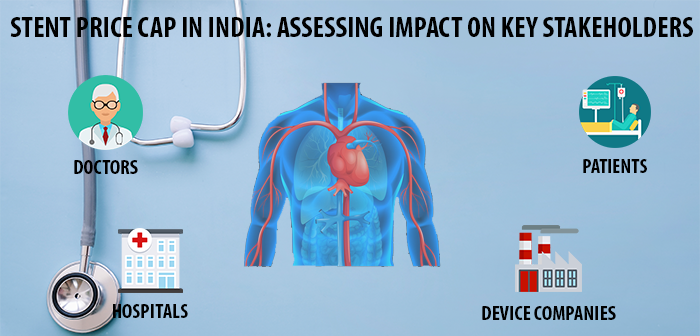
In February 2017, the National Pharmaceuticals Pricing Authority (NPPA) of India fixed the selling prices of coronary stents by an executive order for a year. The ceiling price of bare metal stents was fixed at Rs. 7,260 per unit and that of drug eluting stents and biodegradable stents at Rs. 29,600 per unit.

While this move has caused huge debate on the merits of this policy, what is certain is that it drastically disrupted the cardiac sciences offerings in the healthcare industry. Around 8 months have passed since the prices were capped, and this article attempts to explore the impact of this decision on the major stake holders in the industry—namely the patients, cardiologists, doctors, and hospitals.

The prevailing environment and sentiment at the time was thus:

  • It was believed that there was a huge mark-up between the landed price of the stents and the retail price that the patient was paying, being higher than 1000% in some cases. In other words, the patients were being fleeced.
  • There was a perception in the market that there exists an unholy nexus between healthcare providers (i.e.. hospitals and doctors) and device manufacturers
  • Another widely held belief was that some cardiologists were over-prescribing stents and coercing patients to get an implant even when it was not clinically required.

These perceptions led to pressure from different groups, including doctors, activists, lawyers and common citizens which prompted the government to take this action.

The desired outcomes of the price capping were to reduce the cost of healthcare and provide ethical treatment to patients. Did this happen?

The government had also stated that no hospital would be allowed to raise the prices of angiography and angioplasty procedures for 6 months after the order came into effect. So, overnight, hospitals found their margins in cardiology services wiped out. The hospitals where cardiology was a significant contributor to the top-line felt the impact the most.

But what is the current status after more than eight months of capped-pricing?

There are some nuances that need to be understood in order to fully comprehend the answer to this question.

  1. As the margins in the pricing of stents were high, Doctors and hospitals made most of their earnings through stents as the margins in pricing were high. The procedure charges were kept very low and in some hospitals, angiographies were being done at a loss. In other words, the stent margins were to some extent subsidizing the procedure prices.
  2. The business strategy was to create a large funnel of patients by doing angiographies at very low prices and then converting the clinically positive ones into procedures. The more angiographies that were done. the more patients for procedures were generated, thereby enabling higher revenue to the hospitals and the doctors.
  3. There was also a referral system in which payouts were made to doctors who referred patients. This was again from the margins in stent pricing.
  4. Apart from stents, there are other consumables like balloons, catheters. etc., that are used in cardiac procedures not covered by the NPPA order.


What is happening now?

Hospitalshospital

Initially hospitals suffered losses on account of the moratorium for six months on raising the prices of procedures and their EBIDTA margins may have reduced to 7–8% from 15–18 % for cath labs. If we take into account the interest then this EBIDTA is not enough to cover the cost of capital. However, now that six months have elapsed the hospitals are expected to compensate for this by increasing the prices of procedures. Hence the direct impact to the hospital financials is expected to be minimised in the medium term and overall growth in the invasive cardiology segment may also be impacted.
Hospitals have increased the prices of the consumables used in the angiographies to compensate for the reduction in stent pricing.

Ultimately, the cost to the patient is not expected to change.
The referral business will continue, although the payout amounts may reduce.

Device Companiesfactory

The huge margins that device companies were used to make referral payouts to the industry. With lower pricing, these payouts will reduce but their own margins will remain intact and are not expected to be impacted. What has changed for them is that they are not bringing their latest technology and next generation stents into the Indian market, as the pricing set by the government is not conducive. Hence, patients who could have made use of the latest offerings and treatment will be deprived of them and may be forced to travel abroad for the same.

Cardiologistsdoctor

Earnings by cardiologists will be impacted, but the extent of this reduction is still to be discovered as they have begun to charge more (probably appropriate) procedure fees.

In conclusion, the jury is still out on the impact of the price capping. The price paid by the patient is not expected to reduce, but the earnings of hospitals and doctors may be impacted, with the extent yet to be analysed. Unsavoury referral practices may decrease, but it will be hard to determine the extent of this.

Patientspatient

Two things appear to be certain—firstly, the total cost paid by the patient for angioplasty procedures may not come down and will probably be market driven. Secondly, the latest next generation stents and technology may not be available to Indian patients, for which ironically they may need to travel outside the country.

Next week I will be starting a series on: Challenges of Operating Private Hospitals in India


Last week, we discussed empathy and how we as doctors can be empathetic to our patients. This week, we carry on in our series of 7 Skills We Wish Were Taught at Medical College and delve into leadership.

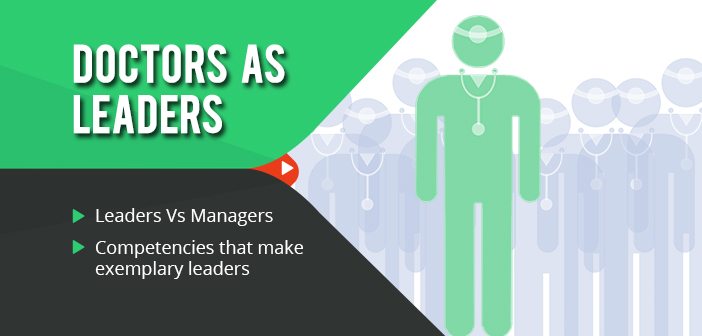
Doctors as Leaders and Managers

As we continue in our study on 7 Skills We Wish Were Taught at Medical College, I now want to focus on a key set of competencies that are clubbed under the umbrella of Leadership skills. Let’s begin by asking a fundamental but important question:

Are doctors leaders?

In order to derive an effective and complete answer to this question, it is important to define and understand leadership. So, who is a leader?

Understanding Leadership

There are a number of theories on Leadership that have evolved over time. From the idea in the late 40s that leaders are born and not made, (the Trait Theory or Great Man of Leadership) there was a shift in the 60s to the Behavioural Theory of Leadership. The early 80s saw the rise of the idea that leadership depended on the situation (Situational Theory of Leadership). To my mind, if leadership traits were inherited and could not be acquired, then leadership would never have been taught successfully, and it would not have been made a key module in universities and management schools across the globe. Currently, the central idea is that leaders need to exhibit vision, charisma, participation, collaboration and empathy, and also that leading and managing are different.

I have a very simple approach to leadership: All Leaders must have followers to lead. Hence, all characteristics that will induce people to follow are components of Leadership traits/skills. In brief, leadership is about influencing others and thereby creating followers to lead.

As our roles as physicians require people to follow and place their trust in us, we ARE leaders whether we like it or not, accept it or not.

We have the opportunity to powerfully influence our patients, the people we work with and the society at large. Therefore, we are de facto leaders by virtue of our profession.

Are Doctors Good Leaders?

Having settled the question that doctors are leaders, we progress to questioning whether doctors are good leaders.

The answer is not simple, and there is wide variation among doctors, but as a community, most doctors struggle with exhibiting good leadership skills. I believe that there are valid reasons that prevent the complete evolution and exhibition of leadership potential of doctors. A lot of this can be attributed to the way we are taught and mentored in our graduate and post-graduate studies. I have listed four major reasons below that I believe are responsible for the lack of maturity of our leadership skills:

  1. Competition

We are brought up in a highly competitive environment right from our school days and continue to compete throughout our life. This invariably means that we are less inclined to work in teams and have a tendency to be lone rangers. This is one of the major reasons for our failure to develop as leaders.

  1. Individualistic Approach

Doctors are used to working as individuals. We rarely work as teams, and hence guard our independence jealously. We value autonomy, and that is the antithesis of leadership, which is all about working with others.

  1. Command and Control Style

Doctors are used to telling patients what to do rather than inspiring or empowering them, which leads them to be less effective leaders. This command-and-control style of behaviours does not gel well with the current environment of empowerment, freedom and knowledge. We can no longer awe people by sheer knowledge alone.

  1. Lack of Good Role Models

Doctors in India rarely have the right models to follow in their graduate and post-graduate days, and hence emulate the style of leadership displayed by seniors, who had learnt the same from their seniors. And thus the cycle continues unbroken.

I vividly remember one of my first days in medical college. We were being introduced to anatomy by one of the most respected and feared professors in the department. He took a piece of chalk, broke it in half and after throwing it on the floor, crushed it with his shoe. He then pointed to the crushed chalk and said dramatically, “This is what I can do to you!” It was an awesome display of power and arrogance, which my class and I never completely forgot. After all, we were 18-19 year old students who had just entered medical college.

What was the need to intimidate us when we were already overwhelmed freshers, eager to learn and please? This incident happened almost 40 years ago but is a vivid memory for me even today. These were the role models for us, and we picked up the same dysfunctional top-down arrogant leadership styles and continue to perpetuate them, much to our folly.

Are Doctors Good Managers?

As leadership is about influencing people so that they follow, management is about “controlling” people and getting them to do things. Management is hierarchical, where there is an organized structure with well-defined positions,

“Management is about arranging and telling. Leadership is about nurturing and enhancing” Tom Peters

job profiles and authority to ensure that processes are followed and things function smoothly. While leaders inspire people to get work done, managers use their position and authority to accomplish organised process driven tasks.

In order to further understand the difference between leaders and managers, I have listed some key differences in the table below:

Leadership vs. Management: Splitting Hairs or Is There a Difference?

Leaders-VS-Managers

The Focus of a

Leader is

  • On the future
  • On broad purposes and directions
  • On commitment
  • On the product
  • On effectiveness

Manager is

  • On the present
  • On details
  • On control
  • On the process
  • On efficiency

The bottom line is: The main difference between leaders and managers is that leaders have people who follow them while managers have people who work for them.

“I start with the premise that the function of leadership is to produce more leaders, not more followers” Ralph Nader

I believe that our education system makes doctors better managers than leaders. But unfortunately, we still have a long way to go on honing our managerial competencies, as we are not taught these systematically.

However, in practice, it is not enough to just exhibit only leadership competencies while ignoring development of managerial skills and vice versa – a successful physician leader needs to develop both Leadership and Managerial skills. They then need to acquire the fine art of balancing both competencies, depending on the situation, to get their team on board with their vision of success.

Going forward in the series, we will focus on the most important leadership competencies, define them and then deep dive and study them individually with special reference to the healthcare world.

There are a number of theories, models and concepts on Leadership and the skills that go into making a good leader, and without getting into the merits of each of those, I have devised and listed four major heads under which most of these competencies are covered. In my subsequent articles, I will attempt to unfold each head and build a more complete understanding of Leadership while maintaining focus on healthcare. The four broad competencies that go into the making of exemplary Leaders are as follows:

Competencies-that-makes-leaders

Next time, we will discuss “Vision and Purpose” the first competency that is necessary for becoming exemplary leaders.

In our last post, we discussed some Active Listening techniques that when followed would help us to make our patients feel that we actually care for them and are there to look after them. This week, we delve deeper and understand empathy, which is key to make the journey from an ordinary doctor to an extraordinary one.

The fundamental question that we physicians need to consistently and continuously ask ourselves is “Am I treating the patient or am I treating the disease?” The answer is a no brainer, but how often do we practice it in our daily routines of managing patients? We must remember that each patient wants to be treated as a person and not as an illness.They want reassurance that the doctor understands the non-medical aspects of his or her condition too.

“Each patient wants to be treated as a person and not as an illness.”

To be great doctors, we need to have an effective understanding of people and not merely the knowledge and practice of medical science. In the 1980s, when I trained, the emphasis was on knowledge and technical skills, but in the past few years, the world and the medical profession has increasingly been focusing on patient satisfaction, which extends far beyond mere treatment of diseases.

So what is this empathy? Why is it so important and how does one learn to be more empathetic?

What Is Empathy?

Empathy is the capacity to understand or feel what another person is experiencing, through the other person’s frame of reference, i.e., the capacity to place oneself in another’s position.

Apart from this, empathy also encompasses a broad range of emotional states, including caring for other people, wanting to help them and discerning what another person is thinking or feeling.

“Empathy is a cognitive attribute, not a personality trait” said Hojat rightly, who developed the Jefferson Scale of Empathy, a tool used by researchers to measure it.

“Empathy is a cognitive attribute, not a personality trait.” Hojat

Clinical empathy is the ability to stand in a patient’s shoes and convey an understanding of the patient’s situation as well as the desire to help. Clinical empathy was once dismissively known as good bedside manners and traditionally regarded as far less important than technical acumen. Increasingly, empathy is now considered essential to establishing trust, the foundation of a good doctor-patient relationship.

It is well established now that empathy leads to the following five outcomes:

Benefits-of-empathy

  1. Greater Patient Satisfaction

When the patient is assured that the doctor has understood their entire problem and demonstrated this understanding, the satisfaction levels dramatically go up.

  1. Better Outcomes

As the doctor displays empathy, the patient trust strengthens, giving them the confidence to share more deeply and openly. This open communication empowers the patient not to hide pertinent facts, resulting in a more accurate diagnosis and follow-up. A win-win for both parties.

  1. Decreased Physician Burnout

As patient outcomes and satisfaction levels increase, the stress levels of the physicians reduce and automatically limit physician burn out.

  1. Lower Risk of Malpractice Suits and Errors

Patients don’t sue doctors they like, with whom they have a meaningful relationship and whose intentions were good. In fact, a large insurance company in the US MMIC is urging the doctors it insures to take an “Empathetics” course.

  1. Saves the Doctor’s Time and Hence Increases Productivity

Most doctors believe that they don’t have the time to be empathetic, but once they practice it, they realise that this skill is a time-saver rather than a time-waster. It can help doctors zero in on the real source of a patient’s concern and short-circuiting repeated consultations, unnecessary conversations and queries.

Why Do Doctors Struggle with Empathy?

Reasons-for-left-lobe-orientation

It is not that doctors are insensitive, unemotional, cold human beings, it is just that they choose to mostly exercise their left lobes (discussed previously as part of 7 Skills We Wish Were Taught at Medical College) and try to use their cognitive brain to handle the emotional aspects of life, which often results in unfavourable outcomes.

We Objectify Patients

One of the most common methods used by us while dealing with a distressing situation or a distressed patient is to “Objectify”. We try to eliminate the human aspects in the equation and treat the patient as an object. This results in a generally negative state of affairs. Patients resent it, and on the contrary, desire empathy from their caregivers.

Doctors are “Explainaholics”

Another common solution we use for patients in distress is to provide more information. We feel that by doing so, the patient’s distress and fear will disappear and they will become more amenable. In reality, bombarding a patient with information does little to alleviate the underlying worry, although this
may appear illogical.

Some of the other reasons doctors aren’t sufficiently empathetic are to do with the way medicine was taught to them, and these are:

  • Medical students experience more experience humiliation and neglect than care and support from those that teach them.
  • The focus of medical education is learning facts about diseases rather than learning how to understand people with diseases.
  • Medical institutions pay little attention to the social and political determinants of health.
  • There is a severe lack of role models for doctors. One study found that 34% medical students identified a lack of good role models as a barrier to learning about empathy.
  • The undergraduate curriculum is very vast, and the working conditions of medical staff put extreme pressure on them.
  • Medicine has an increasingly competitive environment.
  • The current environment is an increasingly threatening one. Threats cannot make healthcare workers more compassionate.
  • There is a loss of continuity of care, which is essential for relationships to develop between patients and professionals.

How Can We Develop and Practice Empathy?

How-to-practice-empathy


As stated earlier, empathy is a cognitive ability and hence, can be acquired and learned as a skill. The essence of practicing empathy is to make sure that the patient comes first, i.e, their problems, issues and feelings must be the foremost priority. We need to make sure that we let go of our own medical agenda, the desire to fix something or make something happen in the visit, and focus completely on the patient.

Some of the skills to practice empathy are similar to Listening Skills, which I have described in detail in my previous articles. The following is a summary:

  • Make eye contact with the patient, not your computer or mobile phone.
  • Don’t stand over a hospitalised patient; pull up a chair.
  • Don’t conduct a monologue in off-putting medical jargon.
  • Pay attention to your tone of voice, which can be more important than what is being said.
  • When delivering bad news, do so when you have ample time and do not allow interruptions.
  • Find out what the patient is most concerned about and figure out how best to address that.
  • Avoid answering a feeling with a fact.
  • Use the right words while communicating, examples of empathetic responses to patient emotion include: “This must be very difficult for you” or “I wish I had better news for you” after delivery of bad news.

In Conclusion

Some would argue that it is not possible for a physician to genuinely empathise with every patient. To do so would be emotionally draining and difficult under time constraints that most doctors currently face. It is thought that a physician is better able to care for his or her patients by remaining “clinically detached”. By not becoming emotionally involved the detached physician is considered to make objective decisions concerning their care.

Yet, there is increasing evidence that when choosing a physician, patients value affective concern as much as, if not more than, technical competence.

The job of any physician is part imparting empathy and part problem-solving. Just as only using one’s cognitive problem-solving skills would not necessarily lead to the best outcomes for patients, only employing one’s empathic and emotional skills will not be for the best either.

The key is knowing when empathy is called for and when it is detrimental. We doctors should aim to find the right balance, the golden mean that optimises care.

Keys-to-unlock-Empathy

If it is a goal of medicine to treat the patient “to alleviate suffering and not simply cure disease” then empathy is a necessary clinical skill. It seems then that the physician must perform a difficult internal balancing act. By becoming too emotionally involved with the patient, we may lose objectivity; by not becoming involved enough, we may be unable to relate as a human being.

As we continue in our series “7 Skills We Wish were Taught at Medical College, we will discuss an interesting issue next week: “The distinction between and Leadership and Management


In the last article, we discussed 4 key attitudes conducive to Active Listening. In this article, we explore some techniques that will help us practice and inculcate this skill in our day-to-day practice.

Let us begin with an example:

I am the Casualty Medical Officer (Emergency Room doctor), and a patient that has been involved in a fight is brought in. I examine the patient and find that there are a few superficial cuts and bruises on his face, and no other injury. The patient insists that the hospital file a complaint with the police. I immediately tell the patient that as he does not have any major injury, he should go to the police station on his own and file the complaint there himself. I also add that doctors are busy professionals and our primary job is to look after patients and not file police complaints and reports.

How do you think the patient and his relatives will react? Do you think the situation better could have been handled better?

We’ll come back to this story later.

4 Active Listening techniques

Most books and writers on the subject outline ten to twelve techniques of active listening, but I have chosen to focus on four, as I believe these are the most important and effective. The following aspects emphasise how we must act on the information we have gathered during and after listening to patients, because as we discussed, active listening is going one step further and effectively processing the input we have received.

4 techniques - Active Listening


Technique 1: Attending

This technique deals largely with our body language, the essence being to non-verbally convey to patients that we care and are very interested in what they have to say.

The key is to stop all activity and give our full, undivided attention to the patient. Face the patient and look at them while they speak, which not only assures them that we are listening to them but also provides us non-verbal cues regarding the core message and feelings that we are trying to discern.

To summarise, attending requires the following:

1. Momentarily suspending all activity
2. Keeping body language open and facing the patient
3. Encouraging through nodding and reassuring words

It is important to refrain from engaging in other actions, like attending a phone call or looking at our mobile and computer screens, as these convey that we are not paying complete attention.

It is also effective to encourage them with short, verbal comments like “yes”, “Ok”, “aha”, etc., which reassure them that we are fully engaged with them and their problems.

This may look very simplistic and easy, which it is, but a lot of us do not put it into practice.

Technique 2: Paraphrasing

Paraphrasing involves repeating in our own words what we have understood from what the patient has been describing. We must be careful to try and use different words from the ones the patient had or it may seem we are simply parroting but not really internalizing the information.

Paraphrasing ensures that there is no gap in what the patient is trying to say and what has been understood by us, thereby reducing the chance of misunderstandings.

It also powerfully reassures the patient that the healthcare professional attending to them is completely clear about their problems and issues.

It is important to not add any of our own assumptions during paraphrasing and also not appear to be judgmental

Paraphrasing saves a lot of time in the long run because once the patient is assured that they have been understood, they will not feel the need to repeat the same things.

Technique 3: Clarifying

Clarifying is the next technique, which is self-explanatory, wherein we ask questions to enhance our understanding. There are three things that we should be appreciative of while using this technique:

1. Ask open-ended questions

These are not simple yes or no questions. We want the patient to talk and describe the issue, and these could be framed as “Ok, please take your time and tell me”, “How did this happen?” or “What do you think caused this?”, so on and so forth. Our objective is to get them to talk as much as possible so that they feel that they have been given an adequate opportunity to unload.

2. Don’t ask questions that put them on the defensive

It is important for patients to feel that they have done nothing wrong and therefore, intimidating questions put them on the defensive. This may then cause them to withhold information or choose not to disclose important information, especially on the past treatment that they may have undergone before approaching us. This can have important repercussions while diagnosing or treating them .e.g., “Why?” is intimidating. Don’t ask “Why?” Rather, use “How come?”

3. Ask about their feelings

“How do you feel?” is an important query, as patients love to have their feelings heard and validated.

Technique 4: Summarising

We must attempt to end our conversations with a summary of what we have understood about their main concerns, issues, complaints and equally importantly, their feelings.

The heart of summarising lies in accurately identifying their core message and core feelings, and having the patient validate this summary.

Why do our patients feel that they have not been listened to?

  • We don’t give them adequate time to relate their story completely.
  • We interrupt them when they are speaking.
  • We are busy on our laptops or mobiles when they are sharing.
  • We frame questions regarding how they are feeling but focus on facts and not their feelings.
  • We do not paraphrase or summarise.
  • We ask intimidating questions and are judgmental, causing them to be reticent.

I believe that most of us doctors practice these techniques in our own ways, having learnt them over time from sheer experience, but we do wish they had been taught to us in a formal, structured manner during our training in medical college, which could have tapped into our potential much sooner and left space for more discoveries.

We now come back to the story of the ER patient. In the light of what we discussed, the situation could have been handled a lot better. By telling the patient that he was okay and not injured,the ER doctor did not listen to him and disregarded his feelings and those of his relatives. The doctor focused on facts and not on the patient.

The manner in which we convey bad news to the patient’s relatives regarding prognosis can be done better if we are aware of the high levels of anxiety, fear and anger.

Next week, we will be discussing the second differentiating competency “Empathy”.

Last week, we understood the distinction between listening and hearing. In this article, we focus on the key attitudes required for Active Listening, which is the first skill in the ongoing series on 7 Skills We Wish Were Taught at Medical College

Our ability to be good listeners arises from the attitude that we have while dealing with our patients. An attitude is “a perspective created by a feeling or by thinking about something or someone, which influences our behaviour”. Hence, having the right attitude is a precursor to being an Active Listener. There are a number of attitudes that make us effective listeners, but for the sake of simplicity, I have chosen the following four that I think are most essential:

4 attitudes - Active Listening - Marked (1)

Attitude 1: Being Understanding and Supportive

I strongly believe that it is not enough for us to know but actually believe that the value of our existence as doctors is totally dependent on patients. This is simply proved by remembering that in case there were no patients, there would be no need for doctors. Hence, a good listening attitude includes behaving in a way that is considerate and respectful to the patient. We need to convey that not only are we interested in the patients’ problems but will do also our best to take care of them. Having someone pay close attention to you and show interest in your problems is always flattering and feels good.

part2_1

We must remember that the goal of active listening is to accurately identify the core message and core feeling, which cannot be identified by merely sticking to facts. At this point, I would like to call to mind the model of the functioning of the brain that we talked about in 7 Skills We Wish Were Taught at Medical College. I spoke about how our education emphasises on using left lobe functions while feelings lie in the ambit of the right lobe. Hence, I would like to reinforce that by using only the left lobe, we cannot correctly identify core feelings and, therefore, our listening is NOT complete. Doctors fall ill too, and if we were asked which kind of professional we would want for our treatment “a warm caring doctor vis-a-vis a cold clinical factual one” doctors too would invariably pick the former. It is definitely not enough to just follow the history-taking format described in Hutchison’s Clinical Methods!

Attitude 2: Listening for the Whole Message

The next critical attitude is to listen to the whole message and not just the parts that matter to us. Yes, we are always short-pressed for time, there are patients waiting outside the clinic, and we also have a hundred other things to manage. So why would we create the time to listen to all the stories and issues that most patients want to share with us? We interrupt and cut them off in mid-sentence, ask pointed clinical questions that enable us to diagnose accurately, and that’s it. Our fact-based logical left brain tells us that anything beyond that is not required to arrive at a diagnosis. Our medical college training tells us that the purpose of consultation and history taking is to diagnose and treat properly, which is what we are doing, anything beyond that is not required.

part2_2

However, the patients want more; they want to be listened to, and if we do not take care of this need, we must be prepared for a less-than-satisfied patient. This feeling of not being listened to leads patients to be anxious, fearful and doubtful of the diagnosis, as they are not sure that the doctor has properly understood their problems.

We need to use our right lobes and not rely only on the fact-based logical left lobe.

Attitude 3: Being Non-judgmental

This is a fundamental attitude to support good listening as this conveys that we value and accept all our patients, even if we do not agree with what they have to say or how they say it. We are physicians, and our role does not enable us to pass judgment on our patients. It takes us away from our role of taking care of them.

part2_3

When we are judgemental, we listen with a filter of our disapproval and bias, and hence, our listening is incomplete and ineffective. We wrongly believe that we can successfully hide behind our professional masks by sticking to just facts, but unfortunately, our behaviour and body language invariably allow our judgemental attitude to dominate, which then blocks our ability to listen effectively. Being judgemental builds a barrier between the patient and ourselves, preventing us from creating an environment of mutual faith and trust. This is not the best foundation for great doctor-patient relationships.

Attitude 4: Developing the Desire to Listen

This is the most essential attitude that we need to be effective and powerful listeners, because without an inner desire, listening can and will not happen. This desire can arise from two motivations “either we are concerned and would like to limit the losses that we have incurred because of not listening, or we want to gain by becoming effective listeners”. In either case, a deep and honest introspection is needed.

part2_4

The attitudes I have spoken about are not foreign to any of us. However, where we usually falter is neglect to practice all of them or only employ one of them at a time, i.e., we may be non-judgemental but fall short of listening to the entire account of our patients. I am certain that medicine and healthcare would be looked upon by less mistrust if all doctors became active listeners.

Next week, we will discuss Step 3 in Active Listening “Active Listening Techniques“. This is part of a series on “7 Skills We Wish Were Taught at Medical College”.

Last week, we established that there are seven key skills that distinguish an ordinary doctor from an extraordinary one. We wish that these seven skills were taught to us in medical college. This week we discuss the first key skill – Listening.

Are Doctors Really Listening to Their Patients?

CartoonIn my 34 years of experience as a doctor, I’ve had the chance to interact with patients, patients’ relatives, hospital managers and doctors. One of the things I’ve heard countless number of times is,

“I am very disappointed and dissatisfied; the doctor did not even listen to me!”

On the other hand, my own psyche and that of my colleagues would be,

“I heard everything that the patient said to me. I am certain about the diagnosis and have started the treatment. I don’t have time to listen to all her stories and imagined symptoms.”

Importance of Listening for Doctors

Delivery-of-care

Is listening a natural ability that all of us have? In a survey conducted by Yelp, one of the most popular survey sites for physician reviews, listening was listed as the second most important skill needed by doctors to ensure patient satisfaction. Unfortunately, listening skills are a rarity in the physician population, which then forces us to ask the following two questions:

  • Is listening a natural ability that all of us have?
  • Is it actually possible to learn to listen?

Hearing-Vs.-Listening-difference

In order for us to answer these questions, we need to understand the major distinction between listening and hearing. I like to use the following example to illustrate this: Imagine an occupied house at night, with all of the family home. The parents are fast asleep, with the usual night noises filling the room, the hum of the air conditioner, the snoring, a tap dripping, when suddenly, the mother wakes up and rushes to the next room where the children are asleep, because she has heard her daughter cry out. How could she hear the cry of her child while still asleep and over all the other auditory input coming into her ear? The answer is simple: It is because she cares and hence, is able to differentiate between all the other sounds and the one that matters to her. This is the distinction between hearing and listening.

“Most people do not listen with the intent to understand; they listen with the intent to reply.” Stephen R. Covey

Hearing is a passive phenomenon by which sounds are perceived by the ear, i.e., hearing is all the auditory input that comes into our ear. However, listening is an activity that we consciously choose to do, when we pay attention to the speaker and what is being said.

Is Listening a Critical Skill for a Doctor?

This brings us back to the essential question: do we listen to our patients? I am reminded of the time when I was working in one of the largest private hospitals in Delhi, which had many renowned doctors. One of them was a phenomenon; the sheer number of surgeries that he performed was astounding. However, the constant feedback from his patients was that he was a great doctor but did not listen to them. In fact, after the surgery, he did not even meet with them. Of course, technically, the surgeon was sure about the surgery that he had performed and therefore, did not feel the need to talk much; the results would speak for themselves, wouldn’t they? There’s no fault with this line of thinking, but there is no denying that the patients felt dissatisfied, and a little extra effort could have transformed the feedback to “He is an amazing doctor who really cares!”

Listening is an important skill in any environment. However, listening is even more crucial to the medical profession because it is a commitment to understanding how the other person is feeling, and therein lies the crux of our job. It is also a compliment because it conveys to the other person that we care about what’s happening to them and in their life, and that their experiences are important. This is the heart of listening, and this is why it is a skill that can enhance the level of care we provide, save time and make us extraordinary doctors.

There is one step beyond listening as well, and that is active listening. It involves using the information gleaned and acting effectively on it. So, how should doctors listen actively? How can this critical skill of “active listening” be developed?

There are three steps to it, which if correctly imbibed into our way of working can enable us to be effective listeners.

Step 1: Defining the End Goal of Active Listening

Within a therapeutic setting, it is essential for the doctor or healthcare personnel to understand the patient’s concerns, feelings, thoughts and perceptions accurately. Medical professionals should always attempt to identify the following two things:

  • What is the core message that the patient is conveying?
  • What are the core feelings that the patients is experiencing?

Infographic3-Blog-2

Once we are able to correctly answer these two questions, we are in a position to modify our responses appropriately, thereby ensuring that the patient is completely satisfied. I have realised that most people are not good communicators, especially when they are ill. Often, they may not be able to put across these two points clearly; in fact, they may not even be aware about their core feelings!

It is critical to appreciate that once we have correctly identified these two issues we can choose and modify our actions, behaviour, communication and the words that we use so that they are appropriate and address the patients’ concerns. Hence, it is our responsibility as doctors to ensure that we accurately identify the core message and core feelings. Otherwise, patients often walk away feeling disappointed.

In India, there are now more and frequent incidents of violence being unleashed on doctors and nurses by disgruntled patients’ relatives. Most of these issues could be nipped in the bud if the interacting doctors were to identify the core message and feeling, thereby empowering themselves to behave and respond suitably. I will keep returning to this phenomenon to use it as a basis to understand key issues about healthcare in India and what we can take away from it.

Next week, we will discuss Step 2 of Active Listening: “The attitudes needed for Active Listening”. This is part of a series on “7 Skills We Wish Were Taught at Medical College”.

In these series, I share from the experience and personal learning of my 30-year journey in the healthcare delivery industry starting as a rookie intern, then working as a C-level executive in Apollo Hospitals Group and now advising investors and consulting firms on the healthcare industry in emerging markets. 

A Tale with Two Different Outcomes

Two young doctors set up practices after they finished their graduation/post-graduation studies. Both had similar backgrounds, received comparable education, obtained comparable grades and had similar potential, but one of them established a great practice with multitudes of satisfied patients and earned tremendous respect amongst their peers, while the other did reasonably well but was unable to match the success of their colleague.

In other words, one doctor performed extraordinarily well (by whichever standards we choose to measure), whilst their colleague was ordinary.

What are the factors that contributed to one doctor making the transition from a ordinary to an extraordinary doctor?

Are knowledge base and clinical skills the only factors that contribute to performance and achievements, or are other factors also responsible? Is it luck, circumstances or other such reasons?

What’s It Take to be a Superstar?

Many studies over the last three decades have conclusively established that it is neither the knowledge base, nor intelligence and hard skills alone that are responsible for superlative performance, but an additional group of factors that help to establish the difference between ordinary and extraordinary performance.

Before discussing further, let’s establish the meaning of competency. A simple definition of competency is the ability to do something successfully or efficiently. In short, competencies are a cluster of skills and knowledge that enable a person to do a job effectively. Most doctors would instinctively state the following as competencies that facilitate extraordinary performance:

  • A high IQ (Intelligence)
  • An up-to-date knowledge of disciplines and specialities concerned
  • Sufficient hard skills for us to diagnose, operate or perform clinical procedures (Hard skills)

In effect, most of us believe that the above three, the troika of knowledge “skills” intelligence should be enough to give us the edge to deliver an outstanding performance. However, this is not true, as these are what we call “threshold competencies”. (A threshold is the strip of wood or stone forming the bottom of a doorway and is crossed while entering a house or room.) So, we need these skills to cross the threshold and be counted as competent doctors ”good doctors” but there are other skills and competencies that serve as differentiators or “distinguishing competencies”.

These distinguishing competencies that differentiate a good from a great doctor, and drive excellent performance are:
7 traits never taught in medical college

Some of these are skills on their own and others are competencies – a mix of knowledge and skills and in these series it is my intention to discuss each individually.

Let us use a simple construct or model of the brain to help us to build an understanding of the issue

We all know that the brain consists of two halves or hemispheres “right and left” which are connected to each other by a bridge of fibres called the Corpus callosum. A behavioural science model of the brain states that the right and left halves of the brain have different functions, which are outlined in the figure below (This is not the anatomical model that is taught in our Neurosciences studies in medical colleges):

The left and right brain functions

Everyone uses both these halves in their daily lives, but it is the ability to use both halves equally well that adds the word “extra” to ordinary. The great doctors are the ones who are able to use both the lobes of the brain effectively and efficiently as and when required to do so.

The seven competencies that we will be discussing are a mixture of right and left lobe functions, but a lot of them will be part of the right brain function.

Our Indian educational system emphasises the use and proficiency of the left lobe abilities alone, while the right lobe abilities are somewhat neglected. This makes us less skillful in the use of right lobe abilities, which we try to master as we go through various life experiences.

It is possible to hone these skills, which come under the umbrella of Emotional Competence or EQ. We can hone our skills that depend on use of the right lobe by undergoing systematic training, which unfortunately does not form part of our medical curriculum.

Next week, we will be discussing the first of our differentiating competencies: “Listening Skills”.