Building Business Excellence in Healthcare – Excellent initiatives by Catex Health and CII Institute of Quality
Is healthcare a business? a contentious and provocative question. However, what is universally accepted is that every healthcare establishment needs to be profitable in order to survive, irrespective of its size or nature.
Funds are needed for the following:
Repair and maintenance
Upgrading of technology
Increments for employees
Future expansions
For Offsetting inflation in input costs
Hence, building “Business excellence” in healthcare is a not a luxury but a necessity!
In India, Excellence in healthcare delivery continues to be a major challenge despite tremendous advances made in technology and massive efforts by both public and the private sector players. 5 Macro level issues currently facing the industry include:
Lack of organisation – Healthcare sector is yet to evolve as an organised industry as more than 80% of providers are in the unorganized sector consisting of individual clinics and small hospitals
Epidemic of Chronic and Lifestyle diseases– Also known as non-communicable diseases (NCDs). These diseases required a radically different approach to treatment focused on effective management rather than cure
Increase in patient expectations – The requirements and expectations of patients have increased leading to a demand for greater involvement from doctors in their overall health and not just treatment
Need for higher levels of transparency – Society is consistently demanding greater transparency and more accountability from healthcare providers (HCPs)
Access to quality healthcare – Lack of access continues to be a major challenge for a majority of patients due to serious paucity of trained manpower, affordability and inadequate investment in healthcare infrastructure.
Innovative solutions that impact healthcare delivery by enabling and empowering the industry towards excellence are the need of the hour.
A key lever towards single handedly solving these problems would be to redefine modern medical practice.
Even Today, Medical practice across different types of setups (from stand-alone clinics to large multi-speciality corporate chains) remains the same as it was decades ago. In a drastically different environment can a decades old approach still be relevant and effective?
It is time that we took a long hard look at the practice of medicine and make it relevant for today.
The answer lies in simplicity, we need solutions that focus on the basics. Solutions that cut through the noise of “features and must haves” to those that matter. Two major initiatives that are working on providing such solutions in healthcare are Catex Health and CII Institute of Quality.
Catex Health
Catex Health is redefining medical practice, setting the standard and providing solutions for a model medical practice today. This company established “by doctors for doctors” uses cutting edge technology based services to deliver services and solutions that are sorely required by medical practitioners today. Their services incorporate both clinical and non-clinical requirements to provide a comprehensive solution that has been devised by leading doctors. Catex Health’s services are built around the patient and are ideal for their clinical requirements. They include:
Improving access to doctors through:
Online directory search systems
Comprehensive Appointment management system
Web pages
Video consultations
Creating deep lifelong Doctor- Patient connect via:
Relevant clinical Education
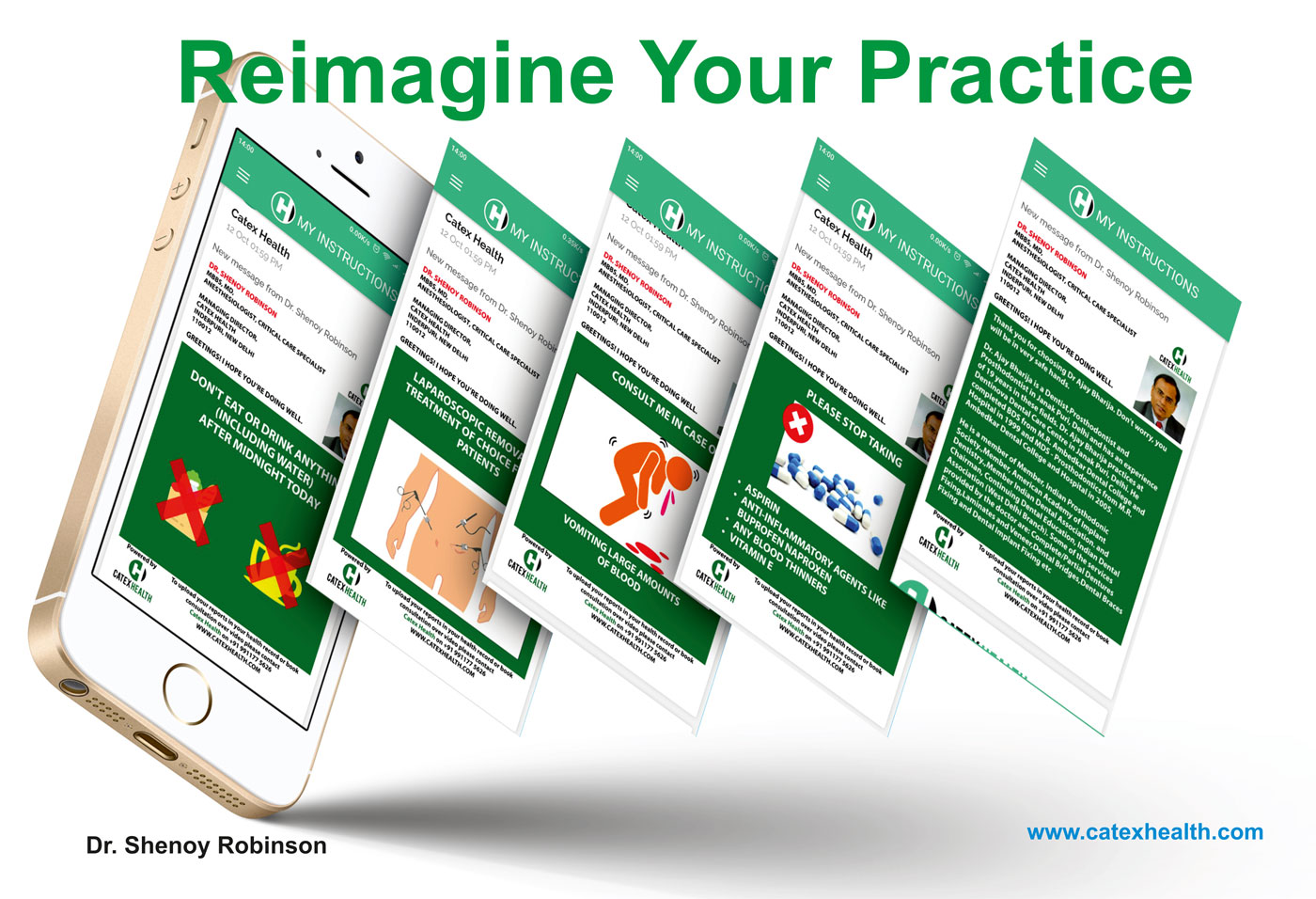
Personalised and specific Instructions
Long-term connect and Follow up
Patient monitoring
Personalised dashboards customised to the patients’ clinical requirements
Integrated clinical devices providing real time monitoring
Medical Record storage
Marketing of doctors
CII Institute of Quality
CII Institute of Quality is actively engaging towards promoting business excellence in the healthcare industry. The focus of CII is to provide practical solutions to all players including individual clinicians, small nursing homes, clinics, diagnostic centres and large hospitals and chains. They are running active interventions based on the Malcom Baldrige model in critically important but neglected areas like:
Leadership
Communication
Use of Systems and Technology
Finance
Service Quality
Human resource
Patient education etc.
Both these organisations are making a mammoth effort in driving business excellence in healthcare, I urge you all to join them in this endeavour so that we can collectively move to the next level of business excellence in healthcare.
In my previous blog we accepted that environment has changed dramatically and we need to change the way we practice medicine in order to make it rewarding and relevant. In this blog we will consider the basics of what the solution should look like.
Transform from an “Episodic” to “Relational” practice
An “Episodic” practice is a mind-set regarding practice that is focused on the here and now. Each encounter with a patient is treated as an isolated one with the underlying assumption that this patient will not necessarily return for another consultation. For Physicians, this approach is antithetical since they deal with an increasing number of Chronically ill patients who require lifelong care.
Contrast this with a “Relational” practice, where once you encounter a patient, the goal is to ensure should ensure that this patient remains under your care for life. This automatically reduces the perpetual craving for new patients and ensures a stable regular income. This is not a new concept. Once upon a time, family physicians were common and would provide this level of service. Unfortunately, it is not possible to give this level of personalised care without the use of technology in today’s world.
A lot of my colleagues will swear by this approach and can testify about their patients’ loyalty. To them I say- Great carry on! But then why the constant desire to acquire new patients? All one needs to do is acquire a specific number of patients in your patient base, factor in a 15 to 20% drop rate balanced with new patients and you are set for life.
For Surgeons, a long-term relationship with a patient is even more critical since patients come to them by either word of mouth or by a physician’s referral. So, a deep long-term relationship with an operated patient can potentially generate huge volume of referrals over time. Every surgeon that I have interacted with, has vociferously affirmed that their satisfied patients have referred many others to their care. Most surgeons try to maintain a long-term relationship with their patients but lack the tools and the know how to do this effectively and systematically.
The core of any relationship lies in the degree and quality of communication present between the parties. When we deal with chronic conditions, effective communication becomes critical.
Presently most doctors communicate with their patients using the following methods(channels):
These channels have drawbacks and flaws that are listed below:
They are not legal as there is no documented record of the advice given. The Hon Supreme Court has clearly stated that giving advice over phones should be avoided. Remember the operating principle is: “if it is not documented it was not said or done!”
They are time consuming and at times irritating
They are episodic and unsystematic
They are not proactive but a more of a reaction to a patient’s queries
They are incomplete as they focus on the immediate issue and not on the patient as a whole
There are no earnings generated from the time spent in this type of communication.
In conclusion, these communication methods do not satisfy both the parties – the doctor and the patient.
Having established that a rewarding practice needs to be relational and not episodic, let us understand the attributes of a relational practice
A “Relational Practice” has the following attributes:
There is a long term (preferably lifelong) outlook
It is based on mutual faith and trust
It treats the patient as a whole and not just one aspect i.e. the disease
Its emphasis is on managing the health of the patient holistically
It involves systematic education on the patients’ disease, life style changes, clinical instructions
It enables easy tracking of vitals and key health parameters to detect and treat complications promptly
For this we require the following:
Data base with the clinical record of patients
Relevant clinical communication based on records available
Monitoring of key clinical parameters of the patient for regular updates on their health status
Personalised, meaningful and long-term communication with the patient.
The Solution
Building a relational practice is possible through the use of technology-based services. Technology can equip us to:
Reach out to patients without physical limitations
Improve patient compliance and clinical outcomes
Improve patient satisfaction
Be legally safe by easy storage of medical records
However, there are many solutions available in the market making it confusing to choose the right one. The following points should be kept in mind while choosing a solution:
CRITERIA FOR CHOOSING THE RIGHT TECHNOLOGY BASED SERVICE SOLUTION
It should be simple and easy to use
It should provide Clinical services along with non-Clinical services
It should be comprehensive and not focused on a particular disease alone. Most chronic ailments have co- morbidities and the solution should be able to handle these
It should be customisable to the patients’ health and their medical requirements
The provider should preferably be a healthcare company with an understanding and experience of medical practice rather than a pure technology/software provider
To conclude we doctors must adapt and change the ways we are currently practicing to make it more satisfying and rewarding. We need to synchronize our practices in line with the new technologies that are available. It is not difficult just needs a change in the attitude. I would be happy to answer any queries and look forward to suggestions and advice from colleagues. In case you are looking for a solution that fulfills these needs please register for a personalised demo by clicking on: WWW.CATEXHEALTH.COM#CONTACT
My colleagues in the medical fraternity today are concerned, upset and even angry at the charged environment in the healthcare delivery sector today. There is a sense of great betrayal and helplessness as we grapple with the increasing incidence of patient dissatisfaction, hostility (even violence), a biased media and an intrusive and aggressive establishment. It feels as if the whole world is conspiring against us. Some of us have even gone to the extent of ensuring that our children do not join in our footsteps. This represents a sea change in the thinking over the last decade whereas earlier, most doctors would aspire for their children to be in the same profession. But are we overreacting?
Scanning the present-day environment
There are five major changes that have occurred in the healthcare environment, which have direct implications on the approach to Private practice.
Change in the disease profile
Explosion of Information
Power of social media
Increased Activism and litigation
Unrealistic expectations of both patients and doctors
Change in disease profile
We know that the disease demographics have radically altered in India. Thanks to increased longevity and changed life style there is shift toward the incidence of chronic and Non-communicable diseases (NCDs). This implies that most of these patients will never get “cured” and therefore the focus of clinical outcomes needs to shift from a “radical cure” to “maintaining a healthy, complication-free patient”. This requires a more comprehensive and holistic approach towards patients, including treatment advice from multiple specialist doctors, Disease education, psychological counselling, Nutrition, Rehabilitation etc.
Explosion of Information leading to unrealistic patient expectations
A vast amount of information on health is available on the internet today. There is little or no regulation or vetting of this information. Information acquired online is often factually incorrect, misleading and liable to create inaccurate perceptions amongst the general public. People tend to accept this half-baked information as the Gospel truth and seek health and treatment related advice based on it. Doctor’s nowadays encounter a large number of patients, who come well-armed armed with their “googled” knowledge and have unreasonable expectations, beliefs and queries.
When patients receive advice from doctors which they do not like or find difficult to accept, they desperately seek alternative therapies. In this quest, they neglect advice given by doctors, show poor compliance to their instructions and land up with complications. However, patients still hold their treating doctors responsible for failure to manage their health.
Unscrupulous marketing by quacks has further compounded this problem. Patients are falsely led to believe that no matter what their problem may be, “it is and should be” easily curable. They are not sufficiently educated that Lifestyle related chronic diseases do not get cured by taking an injection or a pill. This unrealistic expectation of a complete cure and instant relief are a major cause of patient dissatisfaction, lack of trust in doctors and deterioration in the patient-doctor relationship.
Power of the Digital World
There are almost 50 popular social media channels in the world today all of whom have one basic premise – to allow users to share – (experiences, feelings, opinions and other stuff) instantly with minimal effort and stupendous reach. Facebook alone, has more than 2 billion subscribers which is about 25% of the world’s population.
Social media is a double-edged sword; both positive and negative posts can go viral and hence it has the potential to make or break your practice. Negative posts have destroyed reputations built over years within a matter of a few hours.
Doctors are extremely vulnerable to the negative power of digital world and a traditional approach to private practice does not equip us to adequately mitigate this risk.
At the same time, technology can be a powerful tool in the repertoire of a knowledgeable physician, who can leverage it to exponentially improve patient satisfaction and clinical outcomes.
Increased Activism and litigation
A study by Norton Rose Fulbright’s Litigation Trends Annual Survey clearly shows that litigation and disputes will continue to rise in healthcare as the perceived benefits are quite high. In India, healthcare activism has gained tremendous support from the public, the politicians and the bureaucracy. The media makes special efforts to focus on healthcare related issues and developments. Thanks to the highlighting of some unsavoury practices in the industry along with the common perception that private healthcare is expensive, doctors are now considered money minded and unethical.Unfortunately, as long as we continue with our age-old ways of practicing medicine(examples include inability and unwillingness to keep proper patient records, providing prescriptions and advice over the phone) we will be vulnerable to litigation.
Unrealistic expectations of doctors
There are some serious issues regarding doctor’s expectations as well. We tend look at leading doctors in our specialties and expect to have a similar patient base and earnings. Rarely are we prepared to invest the time and hard work that is needed to establish one’s practice. This ostrich like Behaviour of not changing our ways of practicing medicine coupled with a victim mind set will only contribute towards increasing the problem rather than mitigating it.
So what do we do? Is there a solution to manage these issues? The answer is a resounding -Yes!
There is only one underlying principle to accomplish this:
“Develop deep meaningful doctor- patient relationships”
In the next part of this blog we will discuss the basics of what a modern day medical practice should look like.
Hospital Investments – Six Points That Need More Focus By Investors
Healthcare and hospitals are ever green opportunities for investment professionals as they are considered to be risk free, inflation proof, in demand, moderately profitable, stable with a steady CAGR. All good things that an investor is looking for!
However, despite all the intense due diligence and professionalism exhibited by Investment professionals, my experience has been that there are some key areas that require more focus and need to be taken more seriously. Not that these are not discussed but I believe that they require far more consideration and weightage while making decisions. The reason I make this observation is that they have the ability to seriously impact value creation that investors are aiming at.
I have briefly summarized these six points as under:
Give more emphasis and focus on evaluation of the following
Clinical programmes
Management and promoters- on 3 pillars
Marketing and growth strategies and plan
Attitude and adoption to disruptive technologies and services
1) Clinical Programmes
A hospital is not a “hotel” providing some clinical services. The core business is providing healthcare and therefore the clinical offerings need to be assessed in detail. These will actually be revenue drivers irrespective of number of beds or class of facility. Creating capacity is of no use in case occupancy and revenue per bed per day is not up to the mark. These will be possible only if the Clinical programs are great!
Evaluating quality of Clinical programs is not an easy task- especially for “Non -Medical” persons. Even most doctors will not be able to do this effectively. A trained professional can make a fairly good evaluation by just a walk through the hospital, examining OT lists, casual conversations with clinicians and managers etc.
The end result is to have a fairly clear idea on the quality and depth of clinical offerings!
2) Management and promoters
They need to be evaluated on their understanding and competence on what I have personally termed as “Three pillars” for hospital management- Clinical operations, Non-Clinical operations and the Business of hospitals.
In my experience, most senior management is adept on one or two of these pillars but it is rare to find senior executives and CEOs who are good across all three. This is critical for future growth and leadership!
3) Marketing and Growth plan
It is very important to understand how the business is being driven currently and plans for future growth. These are not to be confused by capacity addition! This is about how the beds are going to be filled- clinical offerings, case mix, revenue channels and plans on their growth. This is an area that is the weakest and the proverbial “Achilles heel” in most investment theses!
4) Attitude and adoption to disruptive technologies and services
Healthcare delivery is poised for major disruptions driven by change in disease demographics, new requirements of chronic and life style related disorders and a more demanding environment. Healthcare deliverers- Doctors and Hospitals that are not open to and ready to adapt are going to be in serious trouble in the near future. It is time to wake up and smell the coffee!
In the end I add two Don’ts
Don’t 1
Don’t look at an Investment period of 5 years.
It will not give the ROCE that most investors are looking for. Stay invested for at least 7 to 9 years.
Don’t 2
Avoid cookie cutter approach Each geography and hospital is different. A business strategy that works in one geography will not necessarily work in another. For example, in India the nature of hospital business in Mumbai is vastly different from Chennai or Kolkata.
The western business models especially do not work in emerging economies as there is a fundamental difference- the payer. The payer in USA is different from the payer in emerging markets!
To conclude hospitals and healthcare business models are getting disrupted. What worked for investors 5 years ago will not work today and definitely not in the future. A more granular due diligence focusing on some of the things that I have pointed out will be critical for success.
It is a well-established fact the best marketing and promotion for a doctor is done by their satisfied patients! Nothing is more powerful than a testimonial provided by a patient. Every patient empathises with a fellow sufferer and endorsement by one carries a lot of weight and is usually a tipping point for making a decision.
In this blog I attempt to shed some light on this critical and important message for all healthcare providers- hospitals and doctors!
Why would you want to build patient ambassadors?
There are 4 compelling reasons for any healthcare providers to seriously look at creating brand ambassadors:
It is powerful
Endorsement by a fellow sufferer is most powerful. There is no perceived vested interest and patients love to hear from other fellow sufferers about their problems and solutions. If you sit in the waiting halls of hospitals and clinics in India you will find that complete strangers are busy discussing details of their ailments, treatments and doctors all the time!
It is cost effective
It does not require tons of money to build Brand ambassadors. Advertisements, and pamphlets and other ATL/BTL activities are money guzzlers. This powerful method is almost without cost.
It is long term
While most Advertisement and Promotional channels have a life which is usually very short a patient ambassador is lifelong. A satisfied patient will continue to sing paeans about you for the rest of their life.
It is fulfilling for both
What could be more fulfilling for the doctor and the patient? Deep satisfaction from a job well done is most rewarding
How to make Patients- Ambassadors?
There is only one underlying principle to accomplish this:
“Develop deep meaningful relationships”
Doctors and healthcare providers can accomplish this by 4 methods:
Provide value
The relationship needs to provide value to the patient. The best values are:
You care
You listen
You respond
They are safe in your hands
Pertinent
A successful programme should be designed in such a manner that it is pertinent for the patient. I have seen meaningless communications being sent to patients by Customer care teams of hospitals announcing discounts etc. which have no relevance for the patient. A knee replacement patient getting a discounted cardiac package is not just meaningless but irritating. The patient feels that you are totally oblivious to their ailment and their requirement. It would have been better not to have sent such a message!
Customised
A great programme would ensure some level of personalisation and customisation. It should be relevant to the patient, their disease and its requirements. Most patients suffer form Chronic Life style related disorders that need a comprehensive management approach. They require education, alerts, reminders to improve their compliance and thereby their health.
Sustained
The programme cannot be sporadic or once in a while! One off episodes may be of help but a great programme would be regular and sustained.
What are the road blocks that prevent execution of such programmes?
There are three major road blocks that prevent the formation and execution of successful programmes to build patient ambassadors. They are:
Lack of time
Doctors have paucity of time and successful ones have loads of patients. They are reluctant to invest their time into activities that they perceive are non-clinical or non-value adding! Education of doctors on the importance of building patient ambassadors would go a long way in ensuring their buy in.
Lack of education and knowhow
Most doctors have little idea on how to go about doing this. Sadly most of them have learnt the art of practicing medicine from their seniors who themselves had no clue on how to do this. There is also lot of resistance and reluctance by doctors to change or develop new thinking and ideas. They mistakenly believe that they are the best and most knowledgeable about their practices!
Limited resources
Individual doctors have limited resources to invest in these programmes. Even though they may have the financials they lack the band width to manage!
Solutions
So, then what is the solution?
To my mind the only solution is to use technology-based services. Why?
They increase your bandwidth- better utilisation of time , money and resources to reach a wider audience.
They are extremely cost effective.
How to choose the right programme and solution?
The right programme, solution or service should have the following key elements:
It should be personalised and customised.
It should have a clinical basis
It should be comprehensive- take into account all requirements of the patient including multiple specialities, diet, psychology support etc.
It should have depth and be able to provide clinical information so as to detect complications and mange health effectively!
In Conclusion
Every doctor and hospital leader are well aware of the fact satisfied patients are their best marketing solution. It is time they actively started looking at effecting this in their plans.
For details of some solutions I am contactable on:
“How can I get more patients”-
The incessant insatiable ask of Doctors and Hospitals
My one-point answer!
In my interactions with hospitals and doctors this is a constant refrain- How can I get more patients? More patients result in more revenue and more earnings, so no need to speculate why and no awards for guessing the right reason for this question. But is the answer so difficult.?
Let us examine how they presently go about responding to this question:
1. They market on social media -Face book is the favorite place
2. They do free camps
3. They conduct out station OPDs
4. They create referral networks
5. They do CMEs to promote and create doctor referrals
6. They do health talks at corporates, societies and other such gatherings
7. They print brochures and flyers for distribution
8. The sponsor and participate in health runs and other social events
And so on and so forth…
But what is missing in this whole action scenario? Their existing patients!
Yes! Look after your existing patient well and this problem is resolved. Of course, it will take time, and yes you will have to work hard but then Rome was not built in a day! Most successful doctors have built their practices over time with much hard work. But the key ingredient to success has always been and remain “Patient centricity”.
Patient centricity is not mere jargon but a solid foundation for unmitigated success that involves a specific attitude resulting in concrete actions!
However most of my doctor colleagues and friends would the immediately response by:
“we are doing our best for the patient or for me my patient comes first or better still I will do anything which is in my patient’s interest”.
And any way how does this solve my problem – How do I get more patients? These patients are already mine so why focus on them?
And therein lies the irony.
So, I have two counter questions: 1. Who is your best brand ambassador? 2. How do you presently get your patients? (especially for surgeries and procedures)?
The best brand ambassador for any doctor is their patient – the more satisfied the stronger their “marketing communication”. It is more powerful than any full-page Ad in the newspaper or an Ad film on TV. Mass media can at best create brand awareness but patient conversion happens by the existing patients’ feedback and testimonials!
Next, most patients come for surgeries or procedure by “word of mouth” Guess who is the key influencer? Your existing patient!
So, my friends the answer lies in your control, it is not external!
You can differentiate your practice by the following:
1. Focus on your existing patients.
2. Look after them well
3. Monitor their health
4. Stay connected- make it personal
5. Educate them continually especially those with chronic disease
6. Answer their questions
7. Be available in their time of need.
There are two common push back from doctors:
1. We don’t have time
2. Patients expectations from me are never ending we can’t manage them
My response – Do you have an alternative or choice? Can you afford not to do so?
Especially in the present environment wherein he patient has a voice and is more demanding? To succeed you have to manage these expectations and manage them well. In case you don’t they will keep on searching and once they find someone else who does this for them they will leave you. Patient loyalty will become more and more fragile in case their expectations are not met.
However, meeting these expectations and doing what has been enumerated is not difficult. But it first requires a shift in the thinking and then a change in attitude. The solutions for doing this without extra effort and doing it well exist now- by combining technology with clinical expertise. But are we open and listening?
In case you are interested in learning more about the solutions you can write to me on: shenoy@catexmedicare.com
I am writing this blog on the basis of more than 35 years of experience as a healthcare provider (Doctor)in varied roles. I have been a General practitioner, an Anaesthesiologist, Intensivist, Head Emergency, Hospital Administrator, Medical Director, CEO of large hospital chains and Adviser to investment in hospitals and healthcare businesses.
I write out of concern on the state of healthcare delivery in India and the way the doctor – patient relationship has evolved and changed for the worse over the years.
I am pained at the level of distrust and the widening of the “expectation- offering” mismatch between the patient and the provider (hospitals and doctors).
I am concerned at the kind of marketing and business practices that are being practiced in healthcare delivery( doctors, hospitals, Pharma accompanies, medical device companies and others) today.
I am troubled by the way the narrative around healthcare delivery has painted hospitals and doctors as villains with unscrupulous elements taking advantage of the situation.
I am writing this as the industry appears to be clueless about how to change the narrative and make it more balanced. They have run out of fresh ideas on what they need to do? What should they stop doing? What should they start doing? in order to regain the trust and respect that this profession once commanded.
In the succeeding paragraphs I have tried to capture the essence of what the modern day patient is looking for and expecting from us! Are we listening? And if yes are we ready to change?
Honesty and integrity
The patient is looking for honesty and integrity in diagnosis and treatment. When they seek treatment from us they come with trust and respect, till we damage or destroy it. They want us to acknowledge our personal limitations and resources and the limitations of medical science.
To be Listened to
Patients are looking for doctors who LISTEN to them. Doctors who don’t take their genuine queries as a professional affront, but as an opportunity to allay their fears, concerns and build trust.
To be treated as individuals
Patients don’t want to be clubbed in boxes of a particular disease or condition but as individual human beings seeking relief and succour.
Want to choose
Patients are looking for proper education regarding their problems and treatment options and want to have a say in the decision making process. They hate to be hustled into a surgery or procedure however important it may be clinically. They want to CHOOSE.
To be treated with respect
They want to be respected as individuals and responded to in a respectful manner in an equally respectful tone of voice. They are looking to form deep collaborative relationships characterised by trust, mutual respect, and a commitment to their best interest. We must acknowledge that not every patient seeks to manipulate us or the system.
Disease Education and support to comply
Most patients want to comply with instructions to maximize their health and minimize the impact of their illness. It is just that they need to have a proper understanding, need reminders and nudges. It is disheartening and difficult to handle any disease especially chronic ones that have no cure. We must practice empathy.
Collaborative team approach
They are tired of one doctor criticising the diagnoses and treatment approach of a fellow professional. Specialists and super specialists in order to prove their personal superiority can go to any extent to deride another fellow doctor. What a pity because when we do this we also diminish ourselves and look small. We need to exhibit a collaborative team approach !
Conclusion
Remember most patients are intimidated by the hospital environment and the doctors, hence don’t speak up for fear of being dismissed or labelled as difficult cases.
The modern day patients are more vocal and will not be silenced. If they can’t speak out in front of us they will use social media to vent! We can’t afford to underestimate or ignore the power of social media to both make or break!
To conclude,
the writing is on the wall. We have choice- to change or continue. If we want to change the doctor- patient dynamic, then the change must begin with us.
We must remember they are our patients not our problems!
They are the reason for our existence and hence not expendable!
Why should we educate patients: What’s in it for us?
Most doctors believe that their primary role is to diagnose and treat not educate. At best patient education is a marginal responsibility that can be easily carried out by other categories of healthcare personnel! Why should we waste our time and energy on this low value duty? What’s in it for us?
I hate to say this but most of us are oblivious of how deficient and incomplete patient education is directly affecting our personal clinical practices! Let me enumerate the advantages from effective patient education!
Improved Clinical Outcomes
Improved compliance leads to Better Clinical Outcomes which result in Improved health of the patient. A Healthier patient is a Satisfied patient who gives all credit to their well-being to their treating doctor! Great win for the doctor.
More Patients
Satisfied patients talk about how good their doctor is. In fact they can never stop speaking about their doctor! So the most powerful marketing “ Personal testimony” as now available without any promotion cost. This word of mouth publicity remains an unbeatable, powerful and effective personal marketing tool !
Better Conversion
Doctors know that conversion to a surgery or procedure is a difficult task and the best method is to educate the patient. Even if they go doctor shopping guess who will they ultimately choose to get operated by? You guessed right the doctor who educated them best!
Enhanced Branding
Your persona brand is enhanced when you educate the patient and develop a deeper engagement with them. Amongst many peers and colleagues you will stand out as far as the patients are concerned because the others are not educating as well as you are! Result a Differentiated practice
Reduced Litigation
Once the Patient is better informed their expectations are also calibrated appropriately! Hence less chance of litigation. Unfortunately, most doctors believe in the reverse. They think that the less the patient knows the safer it is for them. This is a fallacy! It is well documented that improved education reduces fear, anxiety and angst!
Doctors are best positioned to educate their patients. If they don’t somebody less qualified and competent will do so causing the patient to suspect and question in their minds. This will amplify dissatisfaction and anger leading to erosion of brand and increased chances of litigation!
We have enumerated 5 powerful reasons for doctors to focus more on educating their patients. It is understood that patient education has a positive direct impact on our practices leading to Increased patient volumes, Increased conversions and Increased earnings!
Food for thought! Doctors are best positioned to educate their patients. If they don’t somebody less qualified and competent will do so causing the patient to suspect and question in their minds. This will amplify dissatisfaction and anger leading to erosion of brand and increased chances of litigation!
Can we afford to continue in the same vein?
So, the question is how we do this effectively and efficiently without major investment of time and energy? That is a matter for my next article!
Healthcare providers in India – both hospitals and doctors are having a tough time today as they grapple with one huge challenge which is a breakdown in doctor patient relationship.
There was a time not so long ago when the “doctor- patient relationship” was sacrosanct, the patient blindly trusted the doctor and their advice. Not anymore! That trust is gone.
Who or what is responsible is a futile discussion as it would only lead us into a situation where each party holds the other as responsible for this situation.
However, a couple of points are worth noteworthy for the healthcare providers:
There is a change in the disease profile – there is an increased prevalence of lifestyle related chronic disease
The patients’ expectations are much higher than what they used to be
Change in disease prevalence has the following consequences:
The patient is not going to get completely cured
The aim of the treatment has changed from curing to management, to ensure that the patients stays heathy and complication free. Any deterioration is caught early and treated promptly.
Patients require a systematic long term follow up
The patient requires a multi-specialty approach with support specialties like diet, education and counselling playing an equally important role in the management of disease as medications and surgery.
There is poor patient compliance to instructions (as high as 50%) given by the providers which negatively effects the clinical outcomes and patient’s wellbeing
These clinical demands are basic and non-negotiable.
The other factor is that the patient is more demanding. Their expectations appear to be unrealistic and based on the premise that they can “buy “cure or good health.
Yes! We understand that this is a flawed expectation, but then isn’t management of expectations the key to success?
Yes! We understand that this is a flawed expectation, but then isn’t management of expectations the key to success?
Is there a magic bullet for dealing with these two issues?
No there isn’t, but a series of actions that providers can take will go a long way towards triumph.
The key lies in effective Patient Relationship management (PRM) which translates into enhancing Doctor – Patient engagement. This is not a subset of Customer Relationship management but a clinical, customised approach that is specific to the patients’ unique healthcare requirements.
What is the benefit for the provider?
Improved patient compliance leading to superior clinical outcomes
Satisfied patients
Increased brand equity of the doctor and the hospital.
So, what are the components of this innovative approach to Patient Relationship management (PRM)?
Patient education
Reinforcement of clinical instructions
Monitoring of critical information – Symptoms, Vitals, Blood reports and other investigations
Creating a System to respond in case of need
The key lies in the successful marriage of Technology with Clinical expertise!
I would like to emphasise that a hospital is about managing and treating patients, and unlike what some people believe it is not a hotel with some medical services attached to it. It is about clinical offerings and services. Hence the heart of a hospital is the presence and quality of the clinical departments that are functioning there.
In their anxiety to differentiate, it has become a fashion for most multi-specialty hospitals to label their clinical departments as Centres of excellence or Institutes- so we will have Institute of Orthopaedics, Institute of Renal Sciences, Centre of Cardiac Sciences and so on and so forth. But is that what they really are? Does mere labelling transform them into Centres of excellence or Institutes.
So,
What is a good Clinical programme? How do you define it?
What are the benefits accruing from a great Clinical programme?
What are its components?
How do we build one?
I will attempt to answer some of these questions in the following few pieces.
What is a good Clinical programme? How do you define it?
If we attempt to find a definition for the above we will fail because there is no ready-made clear-cut definition for a clinical programme. “Clinical” in our context would mean all that is involved with or related to the diagnosis and direct medical treatment of patients. Hence a clinical programme would mean a group of planned and coordinated activities, procedures, etc., which are dedicated towards providing the best clinical outcomes for a patient.
In order to develop a picture of a great clinical programme, let us take a peek at the Neuro sciences programme at the Johns Hopkins hospital – one of the leading centres in the world. The programme consists of more than 45 centres and clinics for Neuro Sciences, 10 speciality programmes and units, 11 research labs, which cover almost the entire gamut of known neurological conditions. They diagnose, treat, monitor, rehabilitate, educate patients, conduct research, teach and train doctors and other personnel, have a dedicated website for themselves, disseminate podcasts…the list is impressive. What a great programme!
However, it took them more than 120 years to reach this stage. They did not achieve this in 2 to 4 quarters!!!
A note of caution, we should not get confused between a clinical department and a programme. A Neurosciences programme comprises of many departments like Neurology, Neurosurgery, Mental health, Rehabilitation etc., each of whom in turn will have very many sub specialities and departments that are complete on their own. It will have the support from dedicated and specific screening and diagnostics, will involve dedicated Patient follow up and monitoring programmes, along with specific rehabilitation, education and research. This is the complete package!
When hospitals are being planned in India we find that those “departments” that do not generate major revenue are either excluded from the hospital offerings or given low priority. The result – an incomplete programme, where in patient care suffers. Take an example, most multi-speciality hospitals in India today are treating chronic diseases and their complications, but how many of them have clinical psychologists in the hospital? It is a no brainer that most of these patients are depressed and/ or anxious requiring counselling and disease education. So, the question is, are they actually providing the best treatment for their patients which they loudly claim? Do they have clinical protocols that are comprehensive and ensure that these protocols are followed? Are they catering to the holistic needs of their patients?
An ideal clinical programme would be “complete”; comprehensive having both the required breadth and depth to treat the diversity of diseases and conditions that fall under the ambit of the programme. Ideally it would have representation from all the clinical specialities that are required to make sure that the patients do not have to go anywhere else for their treatment. It would necessarily inculcate an environment of academics and research as that is critical to stay up-to-date with the latest happenings in the focused field.
Wow sounds utopian! Does it work in India?
Yes, it does – LV Prasad Eye Institute at Hyderabad is a prime example, Tata Memorial cancer hospital, CMC Vellore are others that come to the mind but, I am sure there are many more
Most of my readers would react by saying this is not relevant for us, or me or my hospital. Why would a private hospital be interested in this serious investment of resources and time? Is this not the realm of Government and “not for profit” entities? After all a “for profit” organisation is answerable to investors, and commercial interests are critical. What are they to gain by building great clinical programmes?
In other words, what are the benefits accruing to a private “for profit” hospital by building strong clinical programmes?
Some of the major benefits from focusing on building clinical programmes are as under:
Exceptional clinical outcomes
Standardisation of treatment
Excellent physician engagement
Increased revenue
Increased operational efficiencies
Unparalleled branding
Enhanced patient satisfaction
Motivated and skilled human resource
Attracting the best talent
All the above are a result of offering the best treatment at global standards using internationally accepted clinical protocols for patients who visit the hospital. A good programme is comprehensive and takes into account all aspects of the patients’ requirements (diagnosis, treatment, monitoring, follow up, rehabilitation, support services) and thereby ensures that not only are the clinical outcomes great but there is awesome patient satisfaction. There is a paradigm change that needs to be developed amongst the patients wherein they actually believe that they received treatment at the “best” institution from the best physicians, even if the outcomes do not match with their expectations.
“Physicians form the heart of any clinical programme – they create the programme, management supports it and not vice versa.”
Physicians not only develop the programme, they also continuously review it, add value to the clinical offerings. The key lies in creating a system which allows for meaningful physician engagement from all doctors in the speciality rather than allowing a select few to dominate it. I have seen well intentioned programmes not taking off because one speciality or star doctor dominates the programme with the result that other specialities feel suffocated. For example, if we have a star Neuro Surgeon being allowed to lead the Neuro Sciences programme, the other specialities Neurology, Psychiatry feel suffocated. I have personally witnessed such a situation in in two major hospital chains that I have been associated with. The result was that the hospital could not attract the best Neurologists and struggled with less experienced ones who also eventually left. The programme was lopsided and never really took off.
Such a situation can be avoided if provided the programme is structured and planned well. Once a good programme structure is in place and running, there is a dramatic change in the doctor’s “buy in” and motivation levels. It is to be noted that unlike popular perception the vast majority of doctors value professional satisfaction over pecuniary gains.
A good programme will also ensure that standardised treatment protocols are in place in the hospital, complied with, clinical outcomes monitored and performance reviewed. Peer performance reviews form a key part of a good clinical programme and physician engagement works best when they review and regulate their own with minimal “management” interference.
A great clinical programme on its own attracts the best medical talent because every professional wants to work in the best institution with the best people. There is great fascination for working at the cutting edge of technology with the latest advances and techniques. In other words, for the hospitals there is a double benefit – Not only is the medical staff motivated and engaged (they do not think of leaving for other institutions), there is a steady flow of the best talent into the institution. Human resource issues solved!
Great clinical programmes don’t need to invest in marketing, in fact they don’t have to market at all. The patients, other doctors and the community markets for them. Given adequate time revenue, profits etc. cease to be an issue. Some of the top private institutions in the country who have great clinical programmes do not even have marketing departments!
But establishing a clinical programme requires serious investment of time, resources and will. Are we open to the idea of building the business and not merely buying it? In case there is still interest read on…
How to build a clinical programme?
This blog does not provide me with the the space to go into detail regarding the building of clinical programmes because it is quite complex, but I have tried to simplify and present the basics of the same.
Step 1
The first step towards creating a great programme is to have a vision. Visualise the facility, the equipment, the hordes of patients visiting the hospital, the OTs and ICUs humming with activity, medical conferences and seminars taking place with participation from the best faculty, teaching rounds taking place, visits by influential people…
Once this vison is in place take a look at the components of the programme which are (Remember the programme needs both breadth and depth):
Screening for diseases in the community
Specific Diagnostics to support the various specialties which are included in the programme
Comprehensive Treatment
Vibrant Follow up and monitoring systems
Support therapy like nutrition, counseling etc.
Rehabilitation
Patient education
Research
Academics
Step 2
The next step is to find the right Human resources – maybe create a clinical advisory group that will help to fill in the details that are needed above. The key to success lies in identifying the Leader who will get the right kind of people and will lead this group. This is critical for success as otherwise the discussions and planning will get derailed or lopsided. It is important that there is democracy in decision making and every speciality is given equal respect. This leader may be part of the hospital management or can be outsourced at least initially till the programme is in cruise mode.
Step 3
Develop a tangible plan with specific milestones that define in detail the following requirements:
Space- facility
Medical equipment
Human resource
Technology
Any other special requirements not covered above.
Review process
Step 4
Next plan the budget – adequate funds with appropriate time lines
Step 5
Execute, execute, execute.
I have outlined a generic template which looks very simplistic, however when we get into specifics of any programme the details will be pertinent to that clinical programme and may vary from Programme to programme. The purpose of the blog is to create awareness and not disseminate solutions.
Case in example a modern Cancer programme:
Organ specific approach
Breadth: Specific dedicated teams for Neuro, head and neck, Thoracic, Ortho oncology, Uro oncology, Gynae oncology, Breast GI oncology, Skin, Haematology, Liver etc.
Depth: Specific Diagnostics to support the above which could include Advanced radiology (PET-CT), Genomic testing, Genetics, Nuclear medicine, Tissue typing, cancer markers etc.
Comprehensive Treatment modalities that could include, Transplants, interventional radiology, Nuclear medicine etc. apart from the routine therapies available.
Monitoring & Follow up: Personalised monitoring plans for each patient by using latest technologies and IOT
Quality: A functioning empowered Tumour board, Review processes
Disease education and counselling: By trained counsellors
Nutrition advice: Specific and tailor made for every patent
Rehabilitation: Specific and tailor made for every patient.
Research and Academics
In the business planning sessions of most hospitals today there is a tendency to focus on non-clinical strategies and tactics to improve and grow the business.
These are important but provide only a limited impact on growth, remember every other hospital is also focusing on the similar issues. Where are the differentiators?
In conclusion, clinical programmes form the core business of the hospital, and it is time that hospital managements and promoters in India start focusing on them more strongly.
Yes, it is tough, time consuming, constant, needs resources and bandwidth, and there is a lack of know-how on how to do it, but they are the key to long term success.
We will continue to explore this topic of Growing Business in hospitals by focusing on Marketing in the next blog.